

By Abu Tayyab Luqman
PhD Research Scholar, Department of Islamic Studies
Riphah International University, Pakistan
Introduction: The Biotechnological Revolution and Reproductive Ethics
The intersection of modern biotechnology and human reproduction has fundamentally challenged the traditional boundaries of family, parenthood, and biological lineage. Innovations in assisted reproductive technologies have moved far beyond simple clinical solutions for infertility, introducing complex paradigms such as gestational surrogacy and the emerging horizon of ectogenesis — the development of a human fetus entirely outside the human body within an artificial womb. While mainstream Western bioethics evaluates these advancements primarily through the lenses of individual autonomy, reproductive rights, and market-driven utility, Islamic jurisprudence provides a unique and objective legal and ethical framework rooted in the higher purposes of divine law.
By employing the system of Maqāṣid al-Sharīʿah — the macro-objectives of Islamic law — contemporary bioethical challenges can be evaluated through a holistic paradigm that balances technological utility with civilizational stability. Among the foundational necessities recognized by classical and contemporary jurists, the preservation of lineage (Ḥifẓ al-Nasl) holds a central and indispensable position. This article constructs a rigorous Maqāṣidī critique of surrogacy and emerging reproductive technologies, arguing that while Islamic law actively encourages scientific solutions for therapeutic restoration, it establishes non-negotiable boundaries against the fragmentation of lineage, the commodification of the human body, and the alteration of the natural order.
1. The Ontological Status of Ḥifẓ al-Nasl in Islamic Jurisprudence
Within the architectural framework of the Sharīʿah, the preservation of lineage (Ḥifẓ al-Nasl) is classified as one of the five essential necessities (ḍarūriyyāt) upon which the entire order of human society depends. Imam Abū Isḥāq al-Shāṭibī emphasized in his foundational work al-Muwāfaqāt that the continuation of human generations constitutes the primary foundation for the inhabitation of the earth and the fulfillment of the divine vicegerency: “The continuation of human progeny is the very foundation of the world’s inhabitation” (al-Shāṭibī, al-Muwāfaqāt, vol. 2, p. 11).
Crucially, Ḥifẓ al-Nasl does not merely signify the quantitative reproduction of human beings. It dictates the qualitative protection of biological clarity, legal identity, and psychological security within an intact family structure. Islam elevates the process of procreation from a purely biological phenomenon to a sacred legal covenant. The Quran describes the marital bond as a solemn and binding covenant (mīthāq ghalīẓ), directly linking the generation of offspring to the institution of marriage. Consequently, any technological intervention that introduces a third party into this sacred boundary threatens the ontological and legal clarity that Ḥifẓ al-Nasl is designed to protect.
Imam al-Ghazālī, in al-Mustaṣfā, defines a legitimate public interest (maṣlaḥa) as that which ensures the preservation of the five core essentials. He notes that any utility which actively undermines these essentials is not a maṣlaḥa but a mafsada — a source of systemic corruption (al-Ghazālī, al-Mustaṣfā, vol. 1, p. 173). The integrity of lineage is not an optional social convention; it is a divine imperative woven into the fabric of Islamic civilization.
2. Surrogacy and the Paradox of Broken Lineage
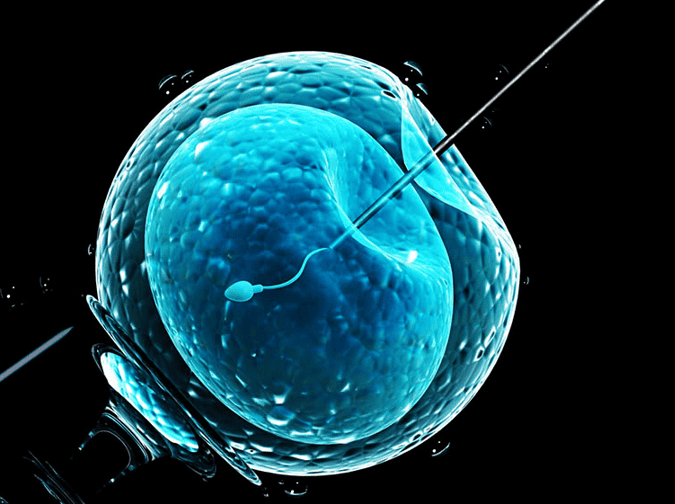
Gestational surrogacy involves the laboratory fertilization of a husband’s sperm and a wife’s egg through IVF, followed by the implantation of the resulting embryo into the uterus of a third-party woman. While frequently promoted as a compassionate solution for infertile couples, a rigorous Maqāṣidī analysis reveals that it produces a profound jurisprudential and ethical paradox: the fragmentation of motherhood and the confusion of lineage (ikhtilāṭ al-nasab).
When reproduction involves a genetic mother who provides the egg and a gestational mother who carries the fetus for nine months, the classical legal definitions of maternity collapse. Islamic law resolves this structural ambiguity through an explicit Quranic standard: “Their mothers are none other than those who gave them birth” (al-Mujādilah: 2). This verse establishes that the physiological realities of gestation, the suffering of childbirth, and biological nurturing within the womb constitute the fundamental legal sources of maternal rights. Ibn Kathīr explains that this verse definitively assigns maternity to the woman who bore and delivered the child (Ibn Kathīr, Tafsīr, vol. 8, p. 61).
By severing the genetic connection from the gestational process, surrogacy generates legal chaos regarding inheritance rights, the rules of forbidden marriages (maḥārim), and profound psychological confusion for the child. Because the preservation of lineage requires absolute certainty and clarity of parentage, the introduction of an external womb fractures the legal integrity of the family unit. Based on these systemic harms, the International Islamic Fiqh Academy of Jeddah issued Resolution No. 16 (1986), declaring all forms of third-party surrogacy categorically impermissible under Islamic law.
3. The Commodification of the Female Body and Takrīm al-Insān
Beyond the structural confusion of lineage, surrogacy intersects negatively with another core Maqāṣidī objective: the preservation of human honor and dignity (Takrīm al-Insān). The Quranic declaration that God has honored the children of Adam (al-Isrāʾ: 70) establishes an ontological barrier against treating the human body as an economic commodity. In Islamic metaphysics, the human body is not personal property that can be rented or bartered; it is a sacred trust (amānah) over which the individual exercises stewardship, not absolute ownership.
The global reality of commercial surrogacy frequently manifests as a predatory socio-economic industry that systematically exploits economically vulnerable women, reducing their reproductive systems to commercial factories and their wombs to rental machinery for wealthier clients. Wahbah al-Zuḥaylī explicitly prohibits the unauthorized commercial exploitation of another individual’s bodily domain: “It is not permissible for anyone to act upon the property of another without their explicit permission” (al-Zuḥaylī, al-Fiqh al-Islāmī, vol. 4, p. 45).
The Islamic Research Academy of Al-Azhar University affirmed that the female womb possesses an inherent sanctity that can only be lawfully utilized within a valid marital bond. Commercializing gestation constitutes akl al-māl bi al-bāṭil — unjust enrichment through illicit means — which is explicitly prohibited in the Quran (al-Baqarah: 188). Any financial arrangement that transforms a human being’s biological function into a commercial service violates both the letter and the spirit of Ḥifẓ al-Nasl and Takrīm al-Insān simultaneously.
4. Ectogenesis and the De-Biologicalization of Motherhood
As reproductive technologies advance, the bioethical discourse must prepare for the advent of ectogenesis — the complete development of a human fetus outside the human body within an artificial womb. While currently in experimental stages for animal models, the eventual application of ectogenesis to human beings represents the logical conclusion of the de-biologicalization of procreation. From a Maqāṣidī perspective, ectogenesis presents an even deeper civilizational threat than surrogacy.
While surrogacy splits motherhood between two women, ectogenesis threatens to eliminate the physical necessity of the maternal body entirely. This complete decoupling of gestation from human biology disrupts the foundational psychosocial and spiritual matrix intended by the Creator. The Quran repeatedly honors the sacrificial depth of maternal experience — bearing children in hardship upon hardship (Luqmān: 14) — recognizing this biological and emotional symbiosis as a foundational pillar of human civilization.
Severing this sacred connection removes the foundational basis for maternal bonding, filial piety, and the emotional stability of the child. Applying the primary legal maxim al-Ḍarar Yuzāl — which dictates that systemic harm must be eliminated — ectogenesis introduces a profound civilizational harm (mafsada) that far outweighs its speculative utilities. It threatens to reduce human procreation to an industrialized manufacturing process, stripping the human being of their spiritual origin and biological dignity.
5. The Maqāṣidī Distinction Between Restoration and Enhancement
To maintain intellectual honesty, a Maqāṣidī framework must clearly distinguish between permissible therapeutic treatments and prohibited transhumanist interventions. Islam is not an anti-scientific religion. It acknowledges illness as part of the human condition and actively encourages medical solutions, based on the Prophetic declaration that for every disease God has placed a cure. In the realm of reproductive medicine, standard In Vitro Fertilization (IVF) is classified as a permissible and praiseworthy therapeutic restoration, provided that it occurs strictly between a legally married husband and wife, with the embryo implanted exclusively into the wife’s own uterus.
This restricted form of IVF is accepted in Islamic jurisprudence because it respects the marital covenant, introduces no external genetic or gestational actors, and directly serves the legitimate maṣlaḥa of overcoming infertility to fulfill the objective of Ḥifẓ al-Nasl. The Islamic Fiqh Academy of Jeddah confirmed this permissibility in its early resolutions, distinguishing clearly between assisted reproduction within marriage and third-party interventions that violate the sanctity of the marital bond.
The jurisprudential transgression occurs when technology moves from repairing a natural biological deficiency within marriage to disrupting the foundational structure of human identity. Any technology that introduces a third-party donor, utilizes a rental womb, or manufactures life in an artificial vacuum crosses the boundary from therapeutic assistance into Taghyīr Khalq Allāh — the impermissible alteration of God’s creation. The Quran attributes this transgression explicitly to the strategy of Shayṭān (al-Nisāʾ: 119), establishing it as a categorical prohibition regardless of the humanitarian framing employed to justify it.
Conclusion: Toward Proactive Ethical Governance of Reproductive Technology
The rapid acceleration of reproductive biotechnology demands a transition from reactive legal rulings to proactive and systemic ethical governance. The Maqāṣidī framework demonstrates that Islamic jurisprudence is neither hostile to science nor indifferent to human suffering. It actively encourages the therapeutic application of reproductive medicine while drawing clear, principled boundaries against interventions that dismantle lineage, commodify the human body, or undermine the civilizational fabric.
By firmly anchoring bioethical discourse within the macro-objectives of Ḥifẓ al-Nasl and Takrīm al-Insān, Islamic jurisprudence demonstrates its enduring capacity to protect the integrity of the human race in the biotechnological era. As Ibn ʿĀshūr observed, the purpose of Islamic law is to establish the best possible order in the affairs of the community (Ibn ʿĀshūr, Maqāṣid al-Sharīʿah al-Islāmiyyah, p. 181). Technology must always remain a servant to human dignity, operating within the moral boundaries established by the Creator to protect human lineage, honor, and the natural order.
The global Muslim scholarly community has a unique responsibility to lead this ethical discourse with wisdom, intellectual rigor, and compassion. The Maqāṣidī tradition — with its capacity to distinguish authentic human interests from manufactured desires — provides the most coherent and humane framework for navigating the profound ethical challenges of reproductive biotechnology in the twenty-first century.
References
- al-Ghazālī, A. Ḥ. (1937). al-Mustaṣfā min ʿIlm al-Uṣūl. al-Maktabah al-Tijāriyyah al-Kubrā.
- al-Shāṭibī, I. M. (1997). al-Muwāfaqāt fī Uṣūl al-Sharīʿah. Dār Ibn ʿAffān.
- al-Zuḥaylī, W. (1985). al-Fiqh al-Islāmī wa Adillatuh. Dār al-Fikr.
- Ibn ʿĀshūr, M. Ṭ. (2001). Maqāṣid al-Sharīʿah al-Islāmiyyah. Dār al-Nafāʾis.
- Ibn Kathīr, I. (n.d.). Tafsīr al-Qurʾān al-ʿAẓīm. Dār al-Kutub al-ʿIlmiyyah.
- International Islamic Fiqh Academy. (1986). Resolution No. 16 on Surrogacy. Jeddah: Organization of Islamic Cooperation.
- International Islamic Fiqh Academy. (1998). Resolution No. 2/92 on Genetic Engineering. Jeddah: Organization of Islamic Cooperation.
- Islamic Research Academy. (2005). Journal of the Islamic Research Academy, Issue 42. Cairo: al-Azhar University.
- al-Kāsānī, A. (1986). Badāʾiʿ al-Ṣanāʾiʿ fī Tartīb al-Sharāʾiʿ. Dār al-Kutub al-ʿIlmiyyah.
- al-Suyūṭī, J. (n.d.). al-Ashbāh wa al-Naẓāʾir. Dār al-Kutub al-ʿIlmiyyah.