
Created to Prosper: Civilizational Progress towards Hayat Al-Tayyibah
Fiqh Al-‘Umrān: Civilizational Purposes of Humanity
A foundational short course on the Qur’anic relationship between worship, civilizational building, tawḥīd, and the pursuit of ḥayāt al-ṭayyibah.
Live online (with LMS resources)
Saturday, July 25, 2026
Sunday, Aug 2, 2026
4 live sessions, 2 hours each
8 contact hours in total
Tuition: Free
Administrative Fee: $20
Live sessions (Makkah Time — UTC+3):
- July 25 — 3:00 PM
- July 26 — 3:00 PM
- Aug 1 — 3:00 PM
- Aug 2 — 3:00 PM
Certificate of Completion from Maqasid Institute upon attendance of all 4 sessions.
English
Instructor
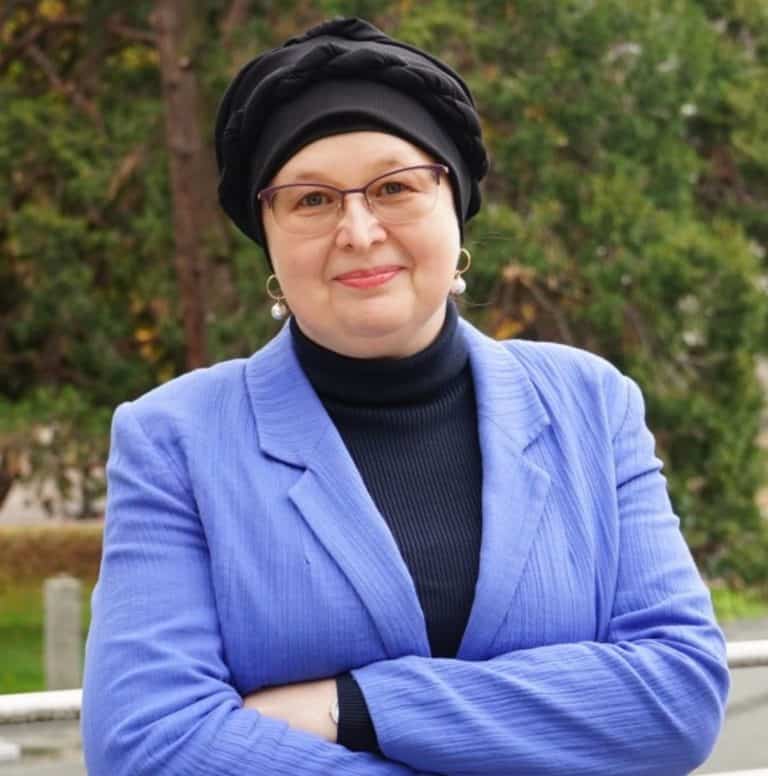
Elmira Akhmetova
Director of Research and Grants, IKI Academy (Georgia) Visiting Researcher, MEDIT, Ibn Haldun University (Türkiye)
Prof. Elmira Akhmetova, PhD, is an expert in Islamic Civilization with an extensive academic and research background. She held prestigious positions such as Senior Research Fellow at the Freiburg Institute for Advanced Studies (FRIAS), the Albert-Ludwigs-University Freiburg, Germany, and was an Alexander von Humboldt Foundation Fellow (2021-2023). Currently, she serves as the Director of Research and Grants and an instructor at the Institute of Knowledge Integration (IKI) Academy in Georgia; and as a Visiting Researcher at the Alliance of Civilizations Institute (MEDIT), Ibn Haldun University, Türkiye. Her previous roles include Head of the Department of History and Civilization at International Islamic University Malaysia (IIUM), Adjunct Associate Professor at the University of South Australia, and Research Fellow at the International Institute of Advanced Islamic Studies (IAIS) Malaysia. With such a diverse and rich professional history, Prof. Akhmetova brings a wealth of knowledge and a unique perspective to the study of Islamic Civilization, making her an invaluable resource for students and scholars alike.
Who Is This Course For?
This course is designed for the general educated Muslim audience. No academic prerequisites are required.
It is especially suitable for participants who want to:
- Understand the Qur’anic relationship between worship, work, and civilizational responsibility.
- Move beyond a narrow divide between “religious” and “worldly” life.
- Reflect on Islamic civilization without nostalgia, defensiveness, or defeatism.
- Understand civilizational decline through Qur’anic patterns and the insights of major Muslim thinkers.
- Reconnect their professional, family, intellectual, or community roles to a higher purpose.
- Explore how Maqasid-based thinking can guide personal and communal contribution in today’s world.
Course Learning Outcomes
Synthesize Key Concepts: Explain the core relationship between khalq al-insān, ʿibādah, ʿimārat al-arḍ, tawḥīd, and ḥayāt al-ṭayyibah.
Expand the View of Worship & Responsibility: Recognize ʿibādah as a comprehensive life orientation and ʿimārat al-arḍ as a Qur’anic civilizational duty.
Analyze History Critically: Evaluate Islamic civilization through a balanced lens, identifying key stages of civilizational disconnection and decline.
Deconstruct Renewal Approaches: Distinguish genuine civilizational renewal from frameworks based on nostalgia, ideology, or external blame.
Formulate a Personal Vision: Reflect on one’s professional field as a form of worship and develop a tailored personal civilizational contribution statement.
Primary Texts and Readings
Selected excerpts will be distributed to participants from works related to Qur’anic worldview, Islamic civilization, civilizational decline, and renewal. Readings may include short excerpts from:
- AbdulHamid AbuSulayman, The Qur’anic Worldview
- Ahmed Essa and Othman Ali, Studies in Islamic Civilization
- Malik Ben Nabi, The Question of Ideas in the Muslim World
- M. Umer Chapra, Muslim Civilization: The Causes of Decline and the Need for Reform
Additional optional readings may be recommended for participants who wish to continue deeper study.
Course Description
This course explores the Qur’anic purpose of human existence by integrating ʿibādah, ʿimārat al-arḍ, tawḥīd, and ḥayāt al-ṭayyibah into a single vision of Muslim life. Moving beyond a ritual-only definition of worship, it presents civilizational building as a form of devotion when grounded in divine consciousness and directed toward the flourishing of creation. Across four interactive sessions, participants will examine the theological foundations, historical achievements, and stages of civilizational disconnection, ultimately inviting learners to reflect on their own fields and transform their daily work into a purposeful contribution to ʿimārat al-arḍ and the pursuit of a good life.
Course Objectives
Redefine Worship: Reconnect ʿibādah with the Qur’anic mandate of ʿimārat al-arḍ (cultivating the earth), viewing it as a whole-life orientation rather than ritual alone.
Elevate Civilizational Building: Present civilizational development as a core human vocation and an act of devotion when guided by tawḥīd and directed toward ḥayāt al-ṭayyibah.
Analyze Islamic History Balancedly: Examine Islamic civilization as a historical expression of justice, knowledge, and flourishing, while critically analyzing the causes of its subsequent decline and disconnection.
Drive Authentic Renewal: Move past nostalgia and ideological slogans toward a wisdom-oriented framework for modern civilizational renewal.
Empower Muslim Agency: Inspire participants to reflect on their own fields and responsibilities, transforming their daily work into a purposeful, Revelation-guided contribution to humanity.
The Idea Behind This Course
Most Muslims know the verse: “I did not create jinn and mankind except to worship Me.” Yet, many have not explored what worship means in the full scope of life—including work, family, and building a world. This course addresses whether worship and civilization are separate obligations, or two dimensions of a single human vocation.
The central argument is that ʿimārat al-arḍ (cultivating the earth) is itself a form of ʿibādah when guided by tawḥīd and directed toward ḥayāt al-ṭayyibah. Consequently, professionals in any field—teachers, engineers, or doctors—are engaged in worship when their work is rooted in divine consciousness and societal flourishing.
This is not a course about political slogans, nostalgia, or abstract pride. It is about reclaiming the true meaning of being a Muslim: not someone who retreats from civilization to worship, but someone who builds civilization as worship.
Course Topics
- The Qur’anic purpose of human creation
- The full meaning of ʿibādah beyond ritual worship
- ʿImārat al-arḍ as a civilizational mandate
- Tawḥīd as a governing principle for human action
- Ḥayāt al-ṭayyibah as the Qur’anic vision of the good life
- Islamic civilization as a historical expression of worship and purposeful building
- Knowledge, institutions, justice, waqf, and community flourishing in Islamic civilization
- The loss of tawḥīdic orientation and the disconnection between worship and civilization
- Sunan ilāhiyyah, Ibn Khaldun, and Malik Ben Nabi as lenses for understanding civilizational decline
- Returning to purpose through wisdom, responsibility, and realistic contribution in our time
Learning Experience
Each session is designed as a live, interactive Zoom seminar rather than a passive lecture. Participants are expected to think, reflect, discuss, and connect the course concepts to their own lives and contexts.
Each 2-hour session includes:
- An opening reflection question
- Two focused lecture blocks
- Structured discussion or breakout conversation
- Qur’anic references and key conceptual framing
- A closing synthesis
- A between-session reflection prompt
The course includes light personal reflection between sessions. These reflections are designed to help participants internalize the concepts and connect them to their own work, community, and responsibilities.
Course Outline
Session 1 — Rethinking Civilization and Progress
What do we mean by Civilization & Progress?
Session 2 — Created to Develop and Flourish
What is our purpose as part of and beyond worship?
Session 3 — Islamic Civilization as a Purposeful, Balanced, and Holistic Progress
Why is progress an inseparable part of humanity’s purpose?
Session 4 — Projecting ʿImarat al-Ard Today: Where Do We Stand?
What does ʿImarat al-Ard look like in our own time, field, and community?
Assessment
There is no graded assessment.
Participants are encouraged to keep a personal reflection journal throughout the course. In the final session, each participant will be invited to formulate a short civilizational contribution statement that expresses how they can contribute to ʿimārat al-arḍ as worship within their own field, capacity, and community.
Maqasid Institute
Maqasid Institute offers educational programs rooted in Revelation and centered on the higher objectives of Islam. Through courses, research, and learning communities, the Institute seeks to help participants connect divine guidance with life, learning, leadership, and the renewal of thought and action in contemporary contexts.
FAQ
This is an introductory–foundational course. It is designed for educated Muslim audiences from diverse backgrounds and may serve as an entry point into deeper Maqasid Institute programs.
No. The course does not require formal academic training in Islamic studies. Key Arabic terms will be introduced and explained throughout the sessions.
There are no graded assignments. Participants will receive light reflection prompts between sessions to help them connect the course concepts to their own lives, fields, and communities.
Yes. A Certificate of Completion is available for participants who attend all four live sessions.
No. The course is not about political ideology, Muslim political unification, or the restoration of a historical empire. It is about understanding civilizational responsibility as worship and reflecting on how Muslims can contribute wisely and purposefully in their own time and context.
Participants will leave with a clearer understanding of the Qur’anic relationship between worship and civilizational building, a more balanced view of Islamic civilizational history, and a personal framework for thinking about their own contribution to ʿimārat al-arḍ as worship.