
Discovering Divine Universal Laws through the Qur'an and Cosmos" – A Free Lecture Series!
A Maqasid Institute & Heartssee Initiative
This series represents the second level of the Reading the Book of the Universe project, offered by the Maqasid Institute in collaboration with the Heartssee Initiative. It builds on the foundations laid in the Reading the Book of the Universe course
Series Overview
- Patterns and Divine Laws: Reading the Universe as a Living Sign
- Signs in Creation: Animal Societies and the Divine Order
- The Relationship of Arabic as a Language in Understanding Ecological Ecoliteracy
- Ecological Colonisation
Why This Matters
To understand the signs of Allah in creation is to recover awe, balance, and responsibility. This series is especially valuable for:
- Educators and curriculum developers seeking to weave these insights into teaching.
- Environmental and cultural practitioners designing nature-based solutions.
- Anyone passionate about ecological literacy rooted in the Qur’anic worldview.
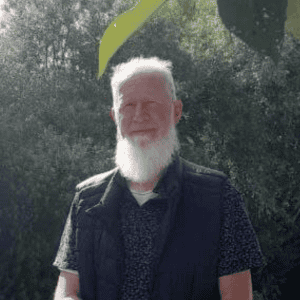
Sheikh Muhammed Foulds
Sheikh Muhammed Foulds is a remarkable individual whose journey unfolds across diverse realms. He was a former Christian minister and embraced Islam in 2000 during wildlife research in SW Arabia. Sheikh Muhammed is predominantly from a Hanafi background and enriched his knowledge by studying under diverse scholars, including Shafi, Maliki, and a few Hanbali. He is rooted in a sound Aqeeda based on the Quran, Sunnah, and the practices of the first three generations of companions. His Islamic Studies journey has taken him to prestigious institutions such as Taif Islamic Institute in Saudi Arabia, Dar ul Loom Azaadville in South Africa, London Muslim College in the UK, Gloucester Islamic Centre in the UK, and Al Maqaasid Institute in Canada.
Format & Duration
- An intensive interactive lecture — 2 hours /lecture
Dates
Lecture 1: Sep 6th
Lecture 2: Oct 25th
Lecture 3: Nov 22nd
Lecture 4: Dec 6th
Time
3 pm Mecca Time
Cost
The lectures are FREE to attend. Participants who wish to support the Institute’s work are welcome to donate $10, $20, or $30 via this link .
Certificates:
A certificate of attendance is available upon request for a fee of $20.
Join the Journey
Reserve your spot for the full series or choose the lectures that interest you most — it’s quick and easy through the link below.
Lecture 1: Patterns and Divine Laws: Reading the Universe as a Living Sign ( Sep 6th)
This lecture is part of (Patterns, Communities, and the Divine Order in the Living Universe) series, which is dedicated to presenting a vision for reading the universe in a way that transforms how we understand ourselves and the world around us. It is offered within the Reading the Book of the Universe project — a collaboration between the Maqasid Institute and Heartssee.
The session focuses on patterns in nature and the divine laws (sunan kawniyyah) that shape them, exploring how reflecting on these patterns preserves our fitrah, refines our aesthetic sensibility, and nurtures the mind’s habits of thinking and contemplation.
In this session, we will explore how recurring patterns — from spirals and branching to waves and symmetry — reveal the Creator’s wisdom and invite us to align our lives with His order. Through Qur’anic reflection, guided observation, and discussion, participants will learn to read the Kitab al-Kawn (Book of the Universe) alongside the revealed Book, deepening both knowledge and presence.
Learning Outcomes:
- Recognize natural patterns as signs pointing to divine wisdom
- Understand sunan kawniyyah as principles that govern balance and transformation in the cosmos
- Cultivate aesthetic and spiritual sensitivity when contemplating creation
- Reconnect with the fitrah and align with the divine order
- Develop reflective habits that nurture contemplation and ethical living
Key Themes
- Why reflect? The impact of losing awe on our awareness and spirit
- Universal laws in the Qur’an: their meaning and examples
- Patterns in nature: waves, spirals, branching, honeycomb, and networks
- Mathematical and geometric patterns: the golden ratio, Fibonacci sequence, fractals, symmetry, and balance
- The inner resonance of patterns: fitrah, beauty, and reflective thought
Lecture 2: Signs in Creation: Animal Societies and the Divine Order (Oct 25th)
This lecture invites participants to explore the diversity, adaptability, and harmony of animal life through the lens of the Qur’an. Drawing on selected ayat, we will reflect on how animals live within divine order, form complex communities, and glorify their Creator in ways that often escape human understanding.
Through examples from the Qur’an — from birds and bees to ants, spiders, and livestock — we will uncover the ethical and spiritual lessons embedded in their lives. We will discuss Islamic teachings on kindness, animal welfare, and responsible stewardship, as well as the ecological wisdom behind balanced coexistence.
The session will also highlight the role of animals in human history and culture, their significance in ecosystems, and the urgent need to protect their habitats in light of modern environmental challenges. By the end, participants will gain a renewed sense of connection to the animal world, seeing it as a vibrant expression of Allah’s mercy and creativity.
Lecture 3: The Relationship of Arabic as a Language in Understanding Ecological Ecoliteracy (Nov 22nd)
In this lecture, we will journey into the Arabic language as more than words and rules—it is a living lens, a key to reading the Kitab al-Kawn, the Book of Nature. Arabic grammar and sound reveal patterns that mirror the harmony of creation: the Ism, Khabar, Harf al-Jarr, and Fi‘l all point to relationships that echo the balance of ecosystems. The study of root patterns opens pathways to see how meaning and life both grow from shared origins.
We will also reflect on the science of Tajweed, where resonance and rhythm parallel the harmonies of nature, and on sentence construction as a metaphor for design in creation. Ultimately, this journey calls us to read the landscape with the heart, attuning to the language of resonance and recognising the Master Pattern mirrored in the cosmic .
Lecture 4: Ecological Colonisation (Dec 6th)
This lecture examines the colonial mindset that disrupts the mizan (balance) established by Allah in creation, tracing its roots from early Western expansion to present-day ecological settler colonisation. We will explore how colonisation has not only dispossessed peoples and lands but has also exploited natural resources, altered ecosystems, and reshaped cultural narratives.
Through case studies and critical analysis, the session will address: the role of colonisation in resource extraction; how conservation has been used as a tool for dispossession; the persistence of colonial legacies; and the influence of Hollywood, media, and corporate power in perpetuating this worldview. We will also uncover the realities behind “greenwashing,” the hidden agendas of global NGOs, and the continuing patterns of ecological settler colonisation in Africa and Palestine.
By the end, participants will be equipped to recognise and challenge the language, policies, and practices that perpetuate environmental injustice, and to envision approaches rooted in justice, stewardship, and the Qur’anic principle of mizan.