
by Dr. Amjad Mohamed-Saleem
A Moment of Reckoning
On 2 March 2026, the World Council of Churches (WCC) hosted a global webinar exploring the intersections of caste and racial discrimination in Asia and beyond — a discussion I had the privilege of moderating.
As somewhat of an ‘outsider’ to the WCC, I found the webinar to be more than just a professional event. It turned into a moment of learning and self-reflection. It compelled me to consider not only the issues discussed within the ecumenical sphere but also how these questions circulate — and how they must be addressed — within Muslim communities and institutions.
Framed within the moral language of faith, the discussion reaffirmed a core belief: racism and caste discrimination are not just social issues — they are serious violations of human dignity and, in theological terms, a sin against God and humanity.
Sin against God and humanity
This framing was both powerful and unsettling. It has emerged at a time when the US, Israel, Iran, the Gulf, Lebanon, and Palestine are engulfed in violence increasingly depicted through racialised, xenophobic, and Islamophobic narratives. These narratives have often simplified complex geopolitical realities into dangerous binaries, even portraying conflicts as civilisational or religious struggles — as if they were contests between Christianity and Judaism on one side and Islam on the other.
This dissonance has struck me deeply. On one hand, we hear a powerful theological affirmation of equality, dignity, and shared humanity. On the other hand, we are witnessing how easily religious identity can be mobilised to justify exclusion, violence, and dehumanisation.
It raised an unsettling but essential question: What accounts for the disparity between theology and practice?
That question cannot be answered by doctrine alone. It requires us to consider systems.
Beyond Doctrine: Confronting Systems, Not Just Ideas
One of the key lessons from the webinar was that discrimination is not accidental, nor simply the result of personal prejudice. It is ingrained in structures, inherited through history, normalised by culture, and reproduced across institutions — including by those that seek to challenge it.
Therefore, if racism and caste discrimination are built into structures, they cannot be tackled through rhetoric alone. Nor can they be resolved by symbolic gestures or isolated diversity policies. This calls for a more fundamental reckoning.
That is why the conversation must take place within a broader system and global context. Over the past several years, especially since 2020, global institutions have spoken more openly about racism, inequality, and exclusion. However, that moment has also been characterised by backlash, fatigue, and superficial engagement.
As I have argued elsewhere, this moment demands more than statements. It demands honesty — a willingness to confront a question that is both uncomfortable and unavoidable: Are we reproducing the very injustices we seek to address?
For me, that question is not only institutional. It also becomes personal. And it leads directly to other questions: What does this mean for Muslim communities? How are they dealing with these issues?
The Architecture of Inequality
One of the most powerful insights from the webinar was how caste and race were described not as separate or culturally specific phenomena, but as parallel systems that arrange humans into hierarchies of value. Dalit theologian and first Dalit Bishop of the Church of England, Rt. Rev. Dr Anderson Jeremiah called this an architecture of prejudice and inequality.
Architecture of Prejudice and Inequality
That phrase is important because it redirects the discussion from specific incidents to broader systems. It clarifies why discrimination continues to exist even when openly racist or casteist language is condemned. This architecture operates through three interlocking dynamics:
dehumanisation — assigning lesser worth to certain groups
institutionalisation — embedding these hierarchies in social, political, economic, and religious systems
control of power — determining who has access to legitimacy, voice, and leadership
Once seen in this way, the connection to colonisation becomes clearer. Colonisation was never only about land. It was about restructuring economies, politics, social relations, and even knowledge itself — deciding who rules, whose voice counts, and what is recognised as truth. It reordered not only territory, but reality. That is why inequality is so resilient. It is not only embedded in institutions but is also embedded in ways of thinking.
This is also why change often feels incomplete. While systems evolve, they may shed the most obvious hierarchical language, but ultimately they retain the underlying function. Therefore, explicit discrimination becomes implicit bias; formal exclusion transforms into structural inequality, and overt hierarchy turns into coded advantage. The language may change, but the power often remains the same or as the saying goes “Old Wine New Bottle”.
The Habit of Ranking
If systems provide the structure of inequality, culture provides its logic. Another important contribution of the webinar — particularly from Rev. Dr. Seoyoung Kim — was the idea that discrimination is also sustained through a habit of ranking.
These may sound harmless. But they are rarely neutral. They locate people within a social hierarchy. They determine, often in subtle ways, how a person will be treated from that moment onward.
This habit of ranking is global. In South Asia, caste formalises it. In Western societies, race and class frequently perform similar functions. In East Asia, educational affiliation or social networks may become primary markers of worth.
In international development and humanitarian work, the ranking becomes institutional: experts and beneficiaries, developed and developing, international and local. Even when intentions are good, these categories often carry implicit hierarchies.
The danger of ranking is not only that it creates inequality. It also generates distance, diminishes empathy, weakens solidarity, and ultimately erodes trust.
Intersectionality: How Inequality is Lived
The webinar also highlighted an important point: discrimination is never isolated. People do not face injustice on just one axis. Their experiences are shaped by the intersection of multiple identities and systems of power. This captures the core of intersectionality.
A Dalit woman, for example, does not experience caste and gender separately. A migrant worker may face racial prejudice alongside labour exploitation and legal vulnerability. An indigenous community may confront racial marginalisation intertwined with land dispossession and political exclusion.
One of the most notable examples shared during the webinar was from West Papua by Ms Rode Wanimbo. Indigenous Papuans are facing systemic racism rooted in colonial histories and ongoing political marginalisation. However, their experience cannot be understood through race alone. Their land is taken in the name of development, their culture is devalued, and their voices are excluded from decisions affecting their future.
This is not merely discrimination. It is power exercised through identity, resources, and narrative. Across South Asia, similar patterns endure. The experiences of Muslims and Christians in India, for example, illustrate how religious identity intersects with politics, law, class, and citizenship. Minorities throughout the region often live at the intersection of caste, class, ethnicity, language, and religion.
Intersectionality matters because single-issue approaches fail. Addressing racial discrimination without considering gender leaves women behind. Tackling poverty without recognising caste or ethnicity can reinforce old hierarchies. Promoting tolerance without addressing political structures may change the tone of a conversation, but not the terms of exclusion.
It also matters for trust. When institutions fail to recognise the complexity of lived experience, communities feel misunderstood, unheard, and unseen.
Diaspora, Migration, and Negotiated Identity
Another significant aspect of the discussion was diaspora. Caste and race do not stay confined to their places of origin. They travel. They move through migration, memory, identity, and community structures. In diaspora contexts, they are often reshaped rather than erased.
Caste discrimination can persist subtly through social networks, marriage customs, community organisation, or religious spaces, often dismissed as culture or tradition rather than recognised as a human rights issue. Meanwhile, diaspora communities may also face racism and exclusion in their host societies. This creates a layered and complex reality: individuals may experience marginalisation externally while reproducing hierarchy internally.
It is crucial to recognise that diaspora is not just about displacement. It is a space for negotiated identity, where belonging is constantly challenged and reshaped. Communities manage multiple cultural worlds, overlapping loyalties, and various pressures to assimilate, preserve, or resist. This makes diaspora a place of tension but also of opportunity. It shows that identity can become a boundary — or a bridge. That is especially apparent among younger generations, who often feel more at ease with plurality and hybrid belonging than with the traditional structures they inherit.
Gender, Voice, and Invisible Inequalities
The webinar also highlighted the gendered nature of discrimination. Women from marginalised communities often experience compounded forms of exclusion. Dalit women, for example, face both caste-based and gender-based discrimination. Their experiences cannot be reduced to one or the other.
Within faith institutions, patriarchal structures often persist despite strong ethical language about dignity and equality. Women may be present, but not influential. They are included, but not empowered; they remain visible, but not heard.
I have seen similar dynamics in other spaces, too. In humanitarian and values-based institutions, gender intersects with race, class, and geography to shape who leads, who is trusted, and who is treated as a recipient rather than an actor. This is why a gender lens is not optional. Without it, efforts to address inequality remain partial, and inclusion becomes conditional.
When Institutions Mirror the Inequality, They Challenge
Perhaps one of the most uncomfortable insights emerging from the webinar was this: institutions that advocate for justice often reproduce the very inequalities they seek to challenge.
From a WCC perspective, participants talked about how churches may preach equality while maintaining caste or gender hierarchies. From my perspective, this is not a problem solely faced by Churches. I have come to realise that values-based organisations may speak beautifully about inclusion, honesty, and solidarity while perpetuating inequities of thought and action, concentrating power in certain regions or groups.
Over more than two decades of working with values-based organisations, both faith-based and values-inspired, youth and humanitarian organisations, I have often seen what I would describe as a disconnect between the audio and the video. The audio is compelling: justice, inclusion, dignity, solidarity. But the video often tells another story: centralised decision-making, egos, arrogance, decisions driven by the “white gaze”, familiar voices dominating, leadership concentrated in known networks and geographical contexts, and new ideas filtered through inherited structures.
These contradictions are not always intentional. But they have consequences. They undermine credibility. They erode trust. They perpetuate the very systems they claim to dismantle. This is why internal transformation matters. It requires hard questions to be asked and answered in terms of : Who holds power? Whose voices are missing? How are decisions made? What assumptions have gone unchallenged?
Without that self-examination, justice risks becoming performative.
Whose Knowledge Counts?
A related dimension of inequality lies in knowledge itself. The webinar highlighted how Western academic and intellectual frameworks still dominate global discourse. What counts as expertise is often shaped by institutions and traditions rooted in particular historical and geopolitical locations. Indigenous, local, and ‘non-Western’ knowledge is frequently marginalised.
This happens, for example, when ecological wisdom is taken seriously only after it is translated into Western scientific language or religious or cultural practices are co-opted into Western wellbeing. It happens when community problem-solving is undervalued in favour of externally designed interventions, and it happens when participation in global conversations depends on access to certain institutions, networks, and languages.
Knowledge is therefore not neutral. It is shaped by power. Colonialism did not only reshape land, labour, and governance. It also restructured epistemology — how the world is interpreted, by whom, and for whose benefit.
Decolonisation, therefore, requires more than resource redistribution. It requires a revaluation of knowledge itself: recognising that lived experience is a form of knowledge and expertise that resides in local communities, and that multiple ways of knowing can coexist.
The Crisis of Trust
At the centre of all this lies a deeper challenge: trust. The Edelman Trust Barometer reveals a world retreating towards insularity. People are narrowing their world to smaller, familiar circles that reflect their views, are increasingly losing optimism, and are resistant to change.
Trust is, therefore, the invisible infrastructure that makes social life possible. When it is strong, differences can be navigated. When it breaks down, differences harden into division.
Racism, discrimination, and systemic inequality erode trust by sending a brutal message: that some people matter less than others. The consequences are far-reaching. Communities fragment; Institutions lose legitimacy; Grievances deepen; Dialogue becomes harder; Conflict becomes more likely.
In my previous work, I have argued that trust-building is essential in what I describe as postnormal times — an era marked by uncertainty, complexity, and overlapping crises. In that context, traditional models of leadership are often insufficient.
What is needed is a deliberate effort to rebuild trust as infrastructure.
I have framed this through the 5 Rs of Trustbuilding:
Responsibility — acknowledging our role in sustaining or benefiting from inequality
Relationships — building meaningful connections across divides
Respect — affirming the dignity of all people
Reflection — questioning assumptions and cultivating humility
Renewal — sustaining hope and commitment over time
Trust is therefore not rebuilt through statements alone but is earned through practice.
Youth, Leadership, and Radical Hope
Across my work on youth engagement, one lesson stands out: young people are not simply recipients of systems. They are already navigating them, contesting them, and reimagining them. Yet institutions often approach youth through tokenism — consultation without power and inclusion without influence.
This mirrors the same habit of ranking seen elsewhere. Just as systems rank by race, caste, or class, they also rank by age and authority. And yet young people often operate differently from the systems they inherit. They build relationships across identity, embrace plurality, and experiment with new forms of solidarity. When they are genuinely trusted, they do not simply fit into existing systems. They begin to reshape them.
That is why I have found ideas such as Generation Peace, helpful in thinking about transformation. Leadership, in this frame, is not about control but service. It is not about consolidation but enabling others to flourish. And young people are not only agents of change, but anchors, advocates, architects, and amplifiers. Any serious attempt to rebuild trust and reimagine peace must take youth seriously — not as future leaders waiting their turn, but as present actors already doing the work.
This is where radical hope becomes tangible. Not optimism, but a choice: to act despite uncertainty, to imagine alternatives despite constraint, and to refuse the idea that inherited hierarchies are inevitable.
Lessons for Muslim Communities: Between Principle and Practice
If the conversations within the WCC space invite deep reflection for Christian institutions, they also raise important — and perhaps overdue — questions for Muslim communities.
For me, this was one of the most significant and personal takeaways. Because while discussions on racism, inequality, and decolonisation have gained momentum globally, Muslim communities and institutions have often remained at the margins of these conversations — not because the issues are absent, but because they are insufficiently named, explored, or confronted within our own spaces.
This absence matters as it creates a gap between what we profess and what we practise.
There is a deeply held and understandable belief within many Muslim communities that Islam, as a faith, is inherently anti-racist. This belief is grounded in powerful and undeniable teachings — from the Qur’anic emphasis on human equality to the Prophet’s (Peace Be Upon Him) final sermon, which rejects racial hierarchy and affirms the dignity of all people.
Whilst these teachings are foundational, they can also create a subtle and unintended consequence: the assumption that we are therefore immune from racism.
In reality, the picture is more complex. Across different contexts, we continue to see:
- anti-Black racism
- colourism
- ethnic hierarchies
- class-based exclusion
- uneven representation in leadership and influence
- country based differences
These dynamics are not always explicit. They are often normalised, unspoken or justified as cultural rather than recognised as structural
Yet they shape how communities function — influencing who is heard, who is trusted, and who feels they belong.
This reflection becomes even more important in the context of Muslim diaspora communities in the West. Muslim communities in Europe, North America, and elsewhere often live with very real experiences of racism, Islamophobia, exclusion, and the constant pressure to justify their belonging. They are frequently racialised, securitised, or treated as permanent outsiders. That experience is real and should not be minimised. But it is not the whole story.
Diaspora communities do not arrive in a vacuum. They bring with them histories, hierarchies, and unresolved questions from “back home.” Migration changes context, but it does not automatically undo inherited systems of power. In some cases, distance can even reinforce them. Within diaspora spaces, we can sometimes see the reproduction of inequities that echo home-country realities:
- ethnic and national hierarchies shaping leadership and visibility
- anti-Black racism and colourism, often left unnamed
- class privilege determining whose voices are amplified
- caste-inflected practices persisting in social and marriage networks
- gendered exclusions, where women serve but do not lead
- linguistic hierarchies shaping access and influence
- age barriers, where the young have no place.
In this sense, diaspora can become a mirror. Communities that ask for justice externally may struggle to practise justice internally. Those who rightly resist Islamophobia may still sideline Black Muslims, converts, women, or those who do not fit dominant ethnic or class norms.
This is not simple hypocrisy. It is a reminder that experiencing oppression does not automatically free a community from perpetuating other forms of exclusion.
It also reveals how closely diaspora life remains tied to home-country patterns. Political loyalties, social hierarchies, and ideas of belonging travel across borders — sometimes softened, sometimes intensified, but rarely left behind.
This is why the work of decolonisation and antiracism cannot remain outward-facing. It must also be inward.
For Muslim diaspora and other minority communities, this means holding a difficult but necessary truth: we can be both marginalized by the societies around us and exclusionary within our own spaces.Engaging with these realities requires more than acknowledgement. It requires a rethinking of the narratives we tell about ourselves. Too often, we rely on idealised understandings of our tradition without interrogating how those ideals are lived — or not lived — in practice.
We speak of unity, equality and of brotherhood and sisterhood, but overlook division, tolerate hierarchy and experience distance and exclusion. Decolonisation, in this sense, is not only about external systems. It is also about internal consciousness. It is about asking: How have our understandings of identity been shaped by history, power, and culture? What assumptions have we inherited but never questioned? Whose voices and experiences have been marginalized within our own communities?
This kind of reflection is not easy but it requires honesty.
Decolonising the Self and the Community
Decolonisation, when applied inwardly, becomes a process of unlearning and rediscovery. It is not about rejecting tradition. It is about returning to its ethical core while recognising how practice has been shaped by context, history, and power.
This involves:
- challenging inherited hierarchies that contradict the spirit of equality
- recognising how colonial histories have shaped social and cultural attitudes
- creating space for diverse voices within the community to be heard and valued
It also means recognising that Muslim communities today are diverse, global, and interconnected. This diversity should be a source of strength — but only if it is accompanied by a commitment to dignity and belonging for all.
Belonging is not simply about shared faith. It is about whether individuals feel recognised, respected, included and are able to participate fully
When internal hierarchies persist, belonging becomes conditional. Some voices are amplified whilst others are sidelined. Over time, this erodes trust — not only between communities and institutions, but within communities themselves.
Rebuilding that trust, therefore, requires an openness to difficult conversations; a willingness to listen to those who have been marginalised and a commitment to change, not just acknowledgement. It requires a shift from defensiveness to accountability.
This moment, then, is not only one of critique. It is an invitation to reflect more deeply on how we live our values; to align principle with practice, to move beyond assumptions of moral correctness, and to engage with reality more honestly and grounded. Because the question is not whether the tradition affirms equality but whether we do — in how we speak, how we relate, and how we organise our communities.
Reassembling the Mirror: The Work Ahead
Perhaps the most powerful image to emerge from the webinar was that of a shattered mirror.
In a fractured world, we no longer see the fullness of one another. We see fragments — race, caste, religion, nationality, status — and we allow those fragments to become the basis for judgment, hierarchy, and exclusion. Over time, we mistake the fragment for the whole.
The webinar made clear that racism and caste discrimination are not isolated problems. They are part of a broader architecture of inequality, sustained by systems of power, reinforced by habits of ranking, lived through intersecting identities, and carried across borders through diaspora and migration. It also revealed something more uncomfortable: even institutions and communities committed to justice are not immune from reproducing these patterns.
That is why the metaphor of the mirror becomes more than descriptive. It becomes a challenge. Reassembling the mirror is not about returning to some imagined past of unity. It is about learning to see differently. It means recognising the fullness of human identity beyond simplified categories, embracing diversity without turning it into hierarchy, and acknowledging difference without allowing it to become division.
The work ahead requires more than awareness. It requires transformation. It requires us to confront systems of inequality, challenge the habit of ranking, recognise the complexity of lived experience, revalue diverse ways of knowing, and rebuild trust through accountability and relationship. In a fragmented world, it is easy to become cynical. That is why radical hope matters. Not because it guarantees success, but because it insists that transformation remains possible.
The mirror is broken. But its fragments still reflect something essential. The task before us is not to discard them, but to reassemble them — carefully, honestly, and collectively — into a vision of humanity grounded not in hierarchy, but in dignity, belonging, and trust.
That is not a small task. But it may well be the work of our time.
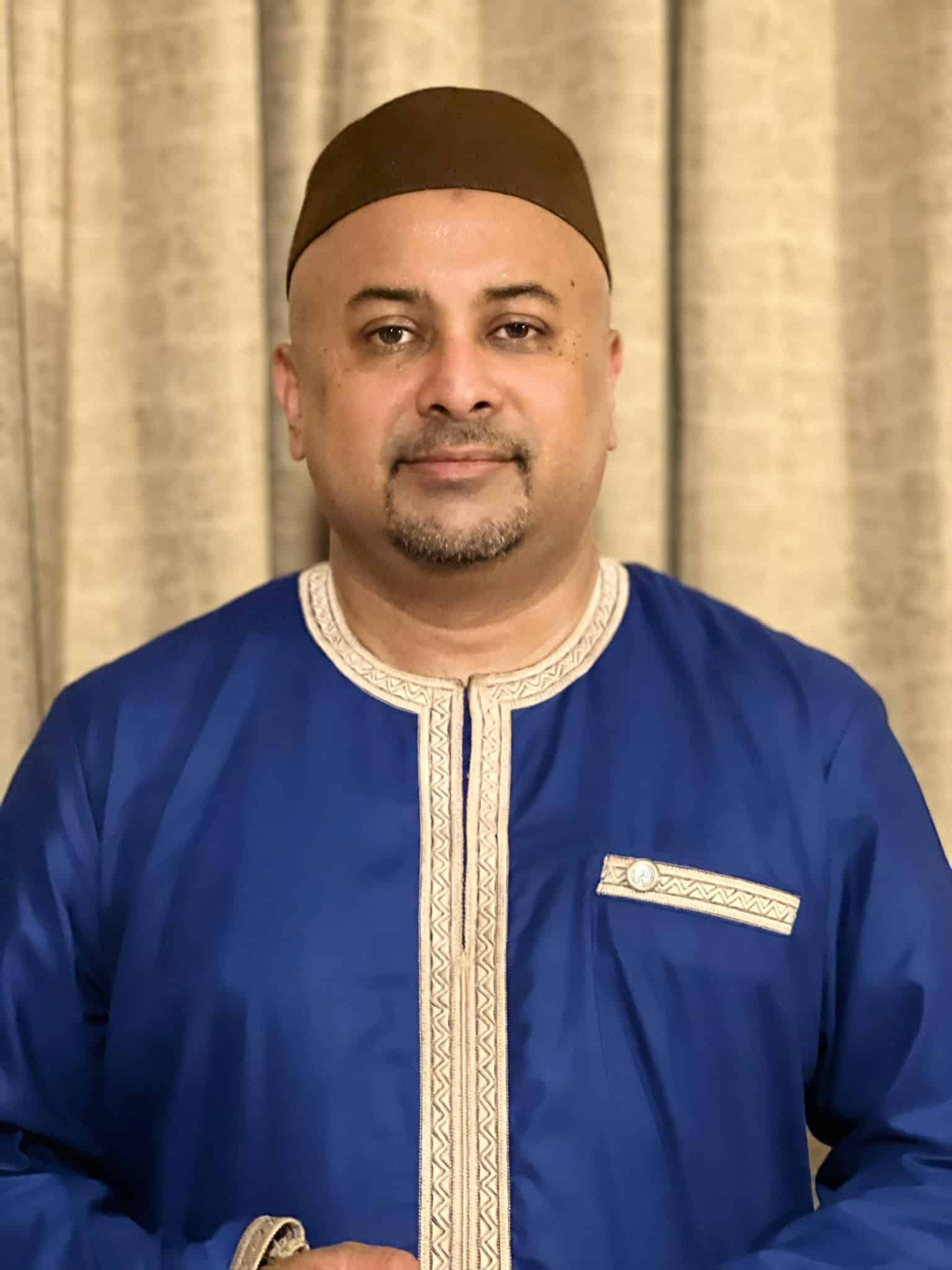
Dr .Amjad Mohamed-Saleem
analyst writing decolonisation, peacebuilding, humanitarian, interfaith, Islam, Sri Lanka & other issues of interest. Have a PhD on ethno politics.